
Protecting Residential Cedar Fences From Moisture
A beautiful cedar fence is a significant investment in your property, offering both privacy and undeniable curb appeal. Known for its natural resistance to decay and insect damage, cedar is a premium choice for homeowners. However, even the highest quality wood is not entirely immune to the elements. Here in Chicagoland, our weather patterns present a unique set of challenges. From heavy spring downpours and humid summers to the relentless freezing and thawing of snowy winters, your outdoor wood surfaces are constantly battling the environment.
Learning how to protect cedar fence from moisture damage is essential if you want to preserve its structural integrity and vibrant color. When wood absorbs water and subsequently dries out, it expands and contracts. Over time, this continuous cycle can lead to warping, cracking, and a weathered gray appearance. At E3 Painting, we often consult with homeowners who are frustrated by how quickly their beautiful new fences start showing signs of environmental stress. By understanding the root causes of moisture damage and implementing a proactive maintenance routine, you can extend the life of your fence by decades while keeping it looking as stunning as the day it was installed.
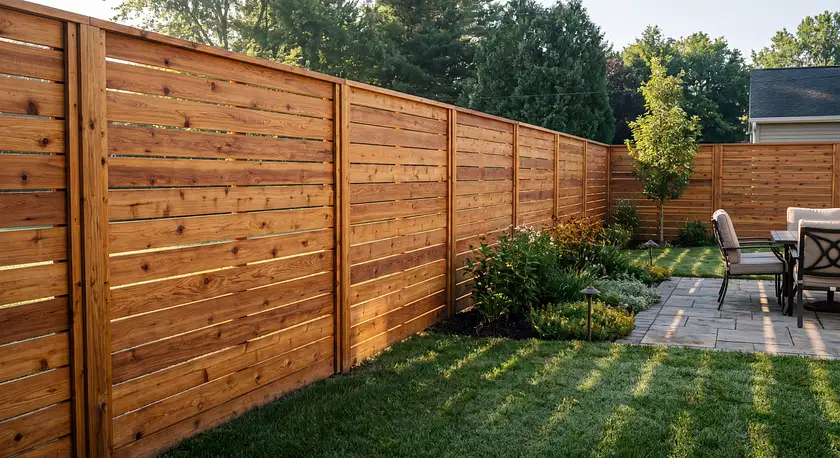
How Moisture Compromises Your Cedar Fence
While cedar contains natural oils that act as preservatives, these oils eventually dry out when exposed to constant sunlight and precipitation. Once the wood loses this natural barrier, moisture can easily seep deep into the grain. This is particularly problematic in specific areas around your property. For example, if your fence runs along a narrow gangway between houses, it likely receives very little direct sunlight. The wood in these shaded, damp corridors stays wet much longer after a rainstorm, creating a perfect breeding ground for mildew, mold, and eventual wood rot.
Another common issue we see involves the base of the fence. When cedar pickets are installed too close to the ground, they absorb moisture directly from the soil and surrounding vegetation. This wick-like effect draws water upward into the wood fibers. Furthermore, the constant barrage of snow piled against the fence during winter months means the wood is trapped in a frozen, wet state for extended periods. When spring arrives, the rapid thawing can cause the saturated wood cells to burst, leading to deep structural cracks.
Addressing these environmental realities requires a two-pronged approach: ensuring proper physical clearance around the fence to promote air circulation, and applying high-quality protective coatings that repel water while allowing the wood to breathe naturally.
Selecting the Best Penetrating Stain for Cedar Fence
When it comes to treating outdoor wood, not all products are created equal. Homeowners frequently ask us about the best penetrating stain for cedar fence applications, and for good reason. Unlike surface-level paints or solid stains that sit on top of the wood like a plastic film, penetrating stains soak deeply into the cellular structure of the cedar. This is crucial because it conditions the wood, replenishes lost oils, and creates a waterproof barrier from the inside out.
Surface sealers have a tendency to trap moisture inside the wood if it isn't completely dry before application, which eventually causes the coating to peel, flake, and blister. A high-quality penetrating stain, however, will naturally fade over time without peeling, making future maintenance significantly easier and less costly. As experts in residential painting, we always recommend using oil-based or high-grade water-based penetrating stains tinted with UV-blocking pigments. The pigment is vital; clear water sealers offer almost zero protection against the sun's ultraviolet rays, which are responsible for bleaching the wood and turning it gray.
Transparent or semi-transparent stains strike the perfect balance. They deposit enough pigment to block harmful UV rays and repel rain, while still allowing the natural beauty and texture of the cedar grain to shine through.
Establishing a Maintenance Timeline
One of the most frequent questions we receive is how often to stain residential cedar fence materials to keep them fully protected. Unfortunately, there is no single answer that applies to every home. The timeline heavily depends on your property's specific microclimate. A fence fully exposed to harsh afternoon sun and driving rain will weather much faster than a fence shaded by large trees or neighboring buildings.
As a general rule of thumb, a newly installed cedar fence should be allowed to weather for a few months before its first treatment, allowing the mill glaze to wear off and the pores to open up. After that initial application, you should plan to re-stain your fence every two to three years. You can perform a simple water test to check if it's time for maintenance: splash a handful of water onto the fence. If the water beads up and rolls off, your current protection is still working. If the water immediately soaks into the wood, leaving a dark, damp spot, it is time to schedule an evaluation.
Staying on top of this schedule is one of the smartest financial decisions a homeowner can make. The cost of routine maintenance is drastically lower than the expense of replacing rotted posts and warped panels down the line.
Professional Protection for Your Property
Protecting your outdoor assets doesn't have to be a stressful or time-consuming chore. By recognizing the signs of moisture wear, choosing the correct penetrating products, and sticking to a consistent maintenance schedule, your cedar fence will remain a sturdy, gorgeous backdrop for your outdoor living space for years to come.
If you have noticed that your fence is starting to look a little tired, or if water is no longer beading on the surface, it is time to take action before the harsh Chicago winter arrives. Proper preparation, including gentle power washing and allowing the wood to dry completely, is critical to ensuring the new stain adheres perfectly and provides maximum defense against the elements.
The team at E3 Painting is here to help you preserve the value and beauty of your home. We specialize in comprehensive fence painting & staining services designed to tackle our unique local climate. Contact us today to schedule a detailed estimate, and let our experienced professionals ensure your property is protected, beautiful, and ready for whatever the weather brings.